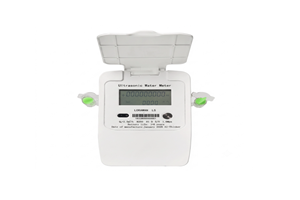
Ai-LRW20-R250
Product Description
Applicable Standards and Verification Regulations:
National Standard: GB/T 778.1-5-2018 "Meters for cold potable water and hot water"
Industry Standard: CJ/T 224-2012, Electronic Remote-Transmission Water Meter
Industry Standard: CJ/T 535-2018, IoT Water Meter
1. Maximum allowable working pressure: 1.0 MPa.
2. Indication error:
a. Low zone (from minimum flow inclusive to transitional flow exclusive): ±5%.
b. High zone (from transitional flow inclusive to overload flow inclusive): ±2%.
3. Output signal resolution: 0.005 m³/1 pulse (other resolutions customizable).
Structure and Working Principle:
This water meter is mainly composed of a copper casing, an impeller measuring mechanism, a dial indicator mechanism, and an induction magnetic needle.
Water flows into the meter through the inlet, enters the impeller chamber through the lower drainage holes of the impeller box, drives the impeller to
rotate, and exits the meter through the upper drainage holes of the impeller box. The rotation of the impeller drives the gears, which in turn drive the digit
wheels through a series of reduction gears to display the total water consumption. Each full revolution of the induction magnetic needle triggers the sensor
above it to output one signal, representing one unit of water volume that has passed through.
The IoT valve-controlled water meter consists of two parts: a split wireless meter and a split wireless gateway. The split wireless meter uses the SX1208
wireless chip from SEMTECH (USA) to achieve low-power design, and integrates communication, metering, and valve control through an ST main control
MCU. The split wireless gateway is responsible for data collection and transmission, and accesses the public network via NB-IoT. This gateway supports the
networks of China Telecom, China Mobile, and China Unicom, offering broad compatibility. An optional card-swiping (T5557) function is available on the
gateway, which is likened to a WiFi router in the meter reading industry.